
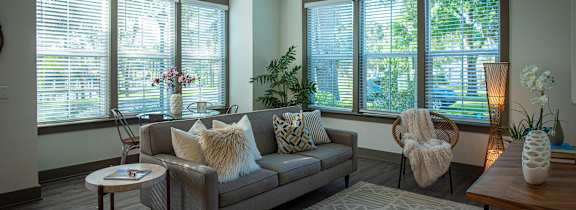

For decades, the apartment search started with one number: square feet. Bigger was better, and the drive was whatever it had to be. That math is changing. Ask renters what they want now and the answers sound less like a floor plan and more like a neighborhood: a coffee counter they can reach without the car, a park at the end of the street, a theatre marquee they pass on the way home. Downtown New Port Richey is one of the places where that shift is easy to see.
Here is a look at the national numbers behind the move Downtown, and what they look like on the ground in Downtown New Port Richey.
Downtown Living at a Glance
- Location over lot size: 59% of residents in the 50 largest U.S. metros would take a smaller lot in a neighborhood they can get around on foot over a bigger lot that means more driving (National Association of Realtors, 2026)
- Willing to pay for it: 63% say they would pay more to live where they can easily stroll to parks, shops and restaurants
- Rare and valuable: Neighborhoods built for foot traffic cover just 1.2% of the land in the 35 largest U.S. metros but produce 19.1% of the nation’s GDP (Smart Growth America)
- Renting by choice: Over the last decade, most new rental demand has come from higher-income households (Harvard Joint Center for Housing Studies, 2026)
- Home is the office: About 27% of paid workdays in the U.S. were worked from home in December 2025 (WFH Research)
- Right here: The Central on Orange Lake sits across from Orange Lake and Sims Park, a few blocks from Richey Suncoast Theatre and the restaurants of Main Street
What the Numbers Say
Every three years, the National Association of Realtors asks 2,000 residents of the country’s 50 largest metro areas what they want from the place they live. Its 2026 Community and Transportation Preference Survey, released in July, found that 89% consider sidewalks and places to walk important when choosing a home, and 82% want shops and parks within an easy stroll. Nearly two-thirds, 63%, said they would pay more for it.
Here is the catch: people want to live near the things they love, and few places actually deliver it. Smart Growth America’s Foot Traffic Ahead report found that what it calls walkable urban places make up only 1.2% of the land in the 35 largest U.S. metros, yet they are home to 6.8% of the population and generate 19.1% of the country’s GDP. In those places, the report measured rental premiums of 47% for apartments and offices. High demand, thin supply.
Experience Over Square Footage
Renters are not settling for less space. Many are choosing it. Harvard’s Joint Center for Housing Studies reported in March that most new rental demand over the last decade has come from higher-income households: renters with options who are deciding what is worth paying for. In a RentCafe survey of renters, 63% called in-unit laundry a must-have, and when renters ranked what matters in a neighborhood, 39% put being able to get around on foot at the top of the list.
Put those together and you get a renter who wants the home to do a few things very well and wants the neighborhood to handle the rest. The second living room is the coffee shop. The backyard is the park. The entertainment budget goes to a show and a glass of wine on Grand Boulevard instead of a bigger house on a quieter street.
The Commute That Disappeared
Remote work did not vanish when the offices reopened. It settled in. Economists at WFH Research, who survey American workers every month, found that about 27% of paid workdays in December 2025 were worked from home. Across 2025, 12% of full-time employees were fully remote and another 27% worked a hybrid schedule.
When the commute shrinks to a hallway, the neighborhood matters more. A home office is only part of the picture. The rest is having somewhere to go at 3 PM when the walls start closing in: a lap around Orange Lake, a coffee on Main Street, a table at the New Port Richey Public Library. In Downtown New Port Richey, all three are a few blocks apart, which makes for a very different workday than one spent two exits away from anything.
Trading Upkeep for Time
The move Downtown is not just a first-apartment story. It makes just as much sense for the empty nesters ready to let go of the big yard, the retirees who came south and never want to replace another roof, and the professionals who simply did the math on their weekends. A lot of people would rather spend Saturday on the river or at a matinee than on a ladder cleaning gutters.
That is the trade: less house to take care of, more life within reach. On-site maintenance handles the repairs. The yard is Sims Park, and somebody else mows it.
Why Downtown New Port Richey
Florida has no shortage of new apartments. What it has fewer of are true town centers, with a century of history, a working Main Street and a calendar that fills itself. New Port Richey has one, and it has spent the last decade earning it back.
In 2019, Tampa Bay 28 found that very few Downtown storefronts were still empty, and talked to a returning resident who remembered Downtown as “the place you avoided” and now asked, “What is this place? What happened? It’s cool.” By 2024, City Manager Debbie Manns told the station the city had seen three years of steady interest bringing new retail, restaurants and housing styles, “a lot of new direction that we haven’t seen in the past.” Main Street program director Tina Gordon described a safe Downtown where you can cover the whole district on foot and see a lot of different things.
You can see it in the landmarks. The 1927 Hacienda Hotel reopened as a boutique hotel in 2022 after years of restoration. Sims Park has been renovated along the Pithlachascotee River. Richey Suncoast Theatre fills its season on Grand Boulevard, and New Port Richey Main Street keeps the Downtown District busy with Fourth Friday, concerts and markets. The Central on Orange Lake sits in the middle of it all, across from Orange Lake and Sims Park, which is exactly what those national surveys describe, at small-town scale.
Downtown Living: Frequently Asked Questions
Why are more renters choosing Downtown living?
National surveys point to location and lifestyle. In the National Association of Realtors’ 2026 survey, 82% said being within an easy stroll of shops and parks is important, and 59% would choose a smaller lot to get it.
Will people pay more to live near shops and parks?
Yes. In the same 2026 survey, 63% said they would pay more to live where they can easily reach parks, shops and restaurants on foot.
Is working from home still common?
Yes. WFH Research found that about 27% of paid workdays in the U.S. were worked from home in December 2025.
What is there to do in Downtown New Port Richey?
Sims Park concerts and events, shows at Richey Suncoast Theatre, the Fourth Friday Block Party, the New Port Richey Public Library, the Pithlachascotee River, and dozens of restaurants and shops along Main Street and Grand Boulevard.
Where is The Central on Orange Lake?
6332 Grand Boulevard in Downtown New Port Richey, across from Orange Lake and Sims Park.
Life at The Central
The surveys say people want to live close to the good stuff. Come see what that looks like here. Take a look at our community amenities, check floor plans and availability, or schedule a tour. You can also call or text 727.478.0770 to learn more about life here.

